
Visual Inspection for Sterile Injections
news
Michael Darnaby, ARL Bio Pharma Technical Sales Representative
Visual inspection is an essential quality-control test that helps ensure patient safety and is critical to the release of finished compounded sterile preparations (CSP). Visual inspection is expected for all sterile injectables and should include evaluation of particulates, container defects, color, and clarity. Visible particulates can originate from many sources in the compounding process, including personnel and equipment. It is imperative that visual inspection results are used not only for CSP release, but also to evaluate the drug compounding process itself.
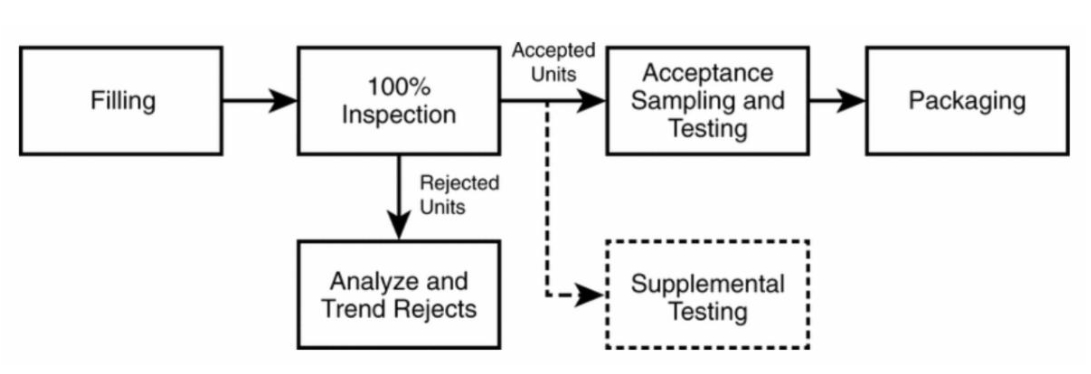
USP 797 states that 100% of the produced batch must be visually inspected. USP 1790 states that visual inspections should be performed immediately after compounding and before labeling to easily detect defects. This inspection can be performed manually or using automation. Once the 100% inspection is complete, acceptance sampling and testing should be conducted on a statistically valid sample taken from the accepted units via manual inspection. This acceptance sampling and testing should be conducted via manual inspection means only by trained personnel and under tightly controlled conditions:
- Use of contrasting backgrounds (white/black)
- Controlled light amount (2000-3750 lux)
- No magnification
- Sufficient inspection time
- Limiting inspection sessions to reduce inspector fatigue
Acceptance limits, test flow, and sampling procedures should be risk-based.
USP 1790 – Figure 1: Typical Process Flow Chart. This chart shows a simplified process flow where solid boxes indicate required process operations, and those with dotted lines (supplemental testing) may be required for difficult-to-inspect products.
For more information on establishing these parameters, please refer to USP 1790.
Visual inspection is not merely a regulatory requirement—it is critical to patient safety control. Data obtained during inspection can also help pharmacies identify process improvements, such as:
- Enhanced filtration techniques
- Improved material handling practices
- Identification of recurring contamination sources
- Refinement of aseptic technique training
Trending visual inspection failures can serve as an early warning indicator of process drift or environmental control issues.
For compounding pharmacists, visual inspection is a critical step in mitigating risk before sterile preparations reach patients. USP 790 establishes the non-negotiable expectation that injectable CSPs must be essentially free of visible particulates, while USP 1790 provides the operational framework for building reliable, consistent, and defensible inspection programs. By implementing structured inspection procedures, investing in personnel training, and incorporating ongoing performance monitoring, compounding pharmacies can significantly reduce the risk of contamination and reinforce their commitment to patient safety and CSP quality.
Resources:
- USP 1 Injections and Implanted Drug Products (Parenterals) -Product Quality Tests
- USP 790 Visible Particulates in Injections
- USP 797 Pharmaceutical Compounding – Sterile Preparations
- USP 1790 Visual Inspection of Injections
- ISO 2859-1: Sampling Procedures for Inspection
- ANSI/ASQ Z1.4: Sampling Procedures and Tables for Inspection by Attributes
- FDA Guidance for Industry – Inspections of Injectable Products for Visible Particulates