
Bailey Rubin, ARL Bio Pharma Technical Sales Representative
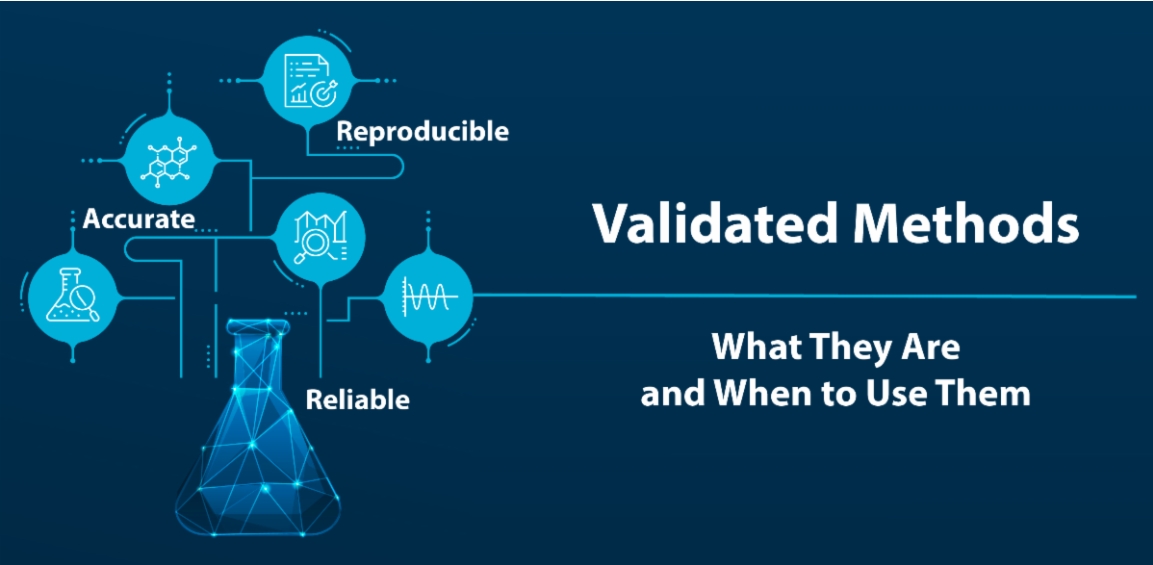
Analytical testing plays a critical role in ensuring that compounded preparations meet established quality, safety, and regulatory standards throughout the preparation’s lifecycle, including development, stability testing, and final release. One primary way this is achieved is by using validated analytical methods, which are formulation-specific and demonstrate that the test procedure produces reliable, accurate, and reproducible results for its intended purpose.
Organizations such as the U.S. Food and Drug Administration (FDA), the United States Pharmacopeia (USP), and the International Council for Harmonisation of Technical Requirements for Pharmaceuticals for Human Use (ICH) publish guidance and standards that define expectations for pharmaceutical testing. According to ICH Q2(R2) Guideline on Validated Analytical Procedures, the analytical performance characteristics to be evaluated depend on the type of test procedure and its intended purpose. The typical validation parameters for analytical methods used to measure specific attributes in release, stability or impurity testing include:
- Accuracy
- Precision
- Linearity and Range
- Specificity
- System Suitability, if measurements are susceptible to various analytical conditions
- Detection Limit
- Quantitation Limit
- Robustness
Together, these characteristics confirm that the method can accurately measure the active ingredient in a formulation while accounting for other components such as excipients, impurities, or potential degradation products.
Validated analytical methods are critical for supporting release, stability, and impurity testing of compounded preparations. For example, potency assays used for quality control release testing must accurately measure the active pharmaceutical ingredient (API) in the finished dosage form, while stability studies require stability-indicating methods capable of separating the API from excipients and potential degradation products to monitor changes over time.
Regulatory expectations for validated methods vary depending on the type of compounding facility. 503B outsourcing facilities, which operate under current good manufacturing practice (cGMP) regulations (21 CFR Parts 11, 210–211), are generally expected to use validated analytical methods for all routine release and stability testing. 503A compounding pharmacies, which operate under a different regulatory framework, are not strictly held to cGMP requirements; however, analytical methods used to support extended beyond-use dating (BUD) or stability claims should still be demonstrated to be suitable for their intended purpose (USP 795 Pharmaceutical Compounding—Nonsterile Preparations; USP 797 Pharmaceutical Compounding—Sterile Preparations).
At ARL, our analytical team supports both 503A compounding pharmacies and 503B outsourcing facilities by developing and applying validated, stability-indicating methods to generate reliable data for stability studies, cGMP release testing, and impurity analysis, supporting the quality and stability of compounded preparations.
For questions regarding obtaining or validating an analytical method for quality control testing, please contact ARL at info@arlok.com or call 800-393-1595.
Resources:
- FDA Guidance for Industry – Current Good Manufacturing Practice – Guidance for Human Drug Compounding Outsourcing Facilities Under Section 503B of the FD&C Act
- ICH Q2(R2) – Validation of Analytical Procedures
- USP 795 Pharmaceutical Compounding – Nonsterile Preparations
- USP 797 Pharmaceutical Compounding – Sterile Preparations
- USP Formulation and Stability Reference Document for Pharmaceutical Compounding
- USP 1225 Validation of Compendial Procedures