
Nicholas Pryor, ARL Bio Pharma Associate Lab Supervisor, Microbiology
Understanding USP 71 Method Suitability
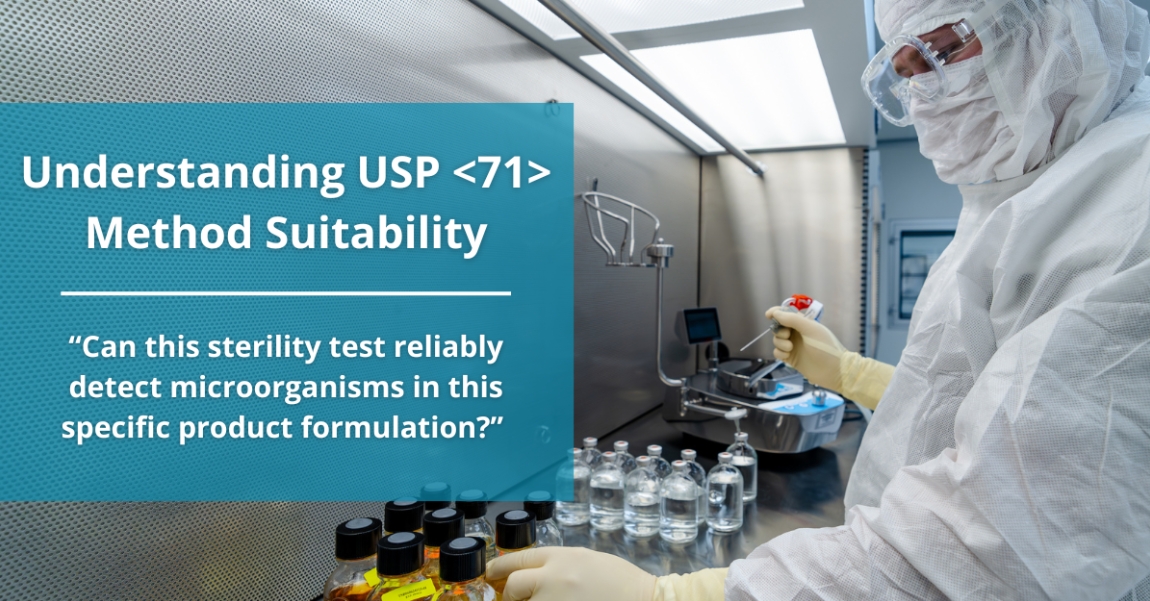
Sterility testing by USP 71 is performed in conjunction with other sterility assurance procedures to help ensure that sterile preparations are free of microbial contamination and safe for patient use. Before sterility testing can be reliably performed on a product, a method suitability test must first be completed for the specific formulation.
What is USP 71 Method Suitability?
USP 71 focuses on sterility testing, and method suitability is a critical requirement within this framework. Method suitability demonstrates that the sterility test method used is capable of reliably detecting viable microorganisms in a specific pharmaceutical formulation.
In simple terms, method suitability answers the question:
“Can this sterility test reliably detect microorganisms in this specific product formulation?”
To verify this, known microorganisms are intentionally introduced into the product under controlled conditions. The test method must then successfully recover and support the growth of these microorganisms. If recovery cannot be demonstrated, the method is not considered suitable for that formulation.
Method suitability is formulation-specific because inhibitory properties can vary significantly between products. Active ingredients, inactive ingredients, preservatives, and vehicles may all interfere with microbial recovery.
Why Does Method Suitability Matter?
Pharmaceutical formulations can interfere with sterility testing in multiple ways. Without proper method suitability validation, there is a risk of false-negative sterility results, where a contaminated product may incorrectly appear sterile.
Common formulation challenges include:
- Antimicrobial preservatives that inhibit microbial growth
- Antibiotics or active ingredients with antimicrobial activity
- Viscous or oily formulations that trap microorganisms
- Suspensions or poorly soluble products that are difficult to filter
- Extreme pH or excipient interactions that suppress microbial recovery
Method suitability ensures that these formulation-specific challenges are identified and addressed before routine sterility testing is performed.
How is Method Suitability Demonstrated?
A sterility test method is selected based on a detailed evaluation of the product formulation and any applicable sub-formulations. The two primary sterility testing approaches described in USP 71 are closed-membrane filtration and direct inoculation.
Closed-Membrane Filtration
Closed-membrane filtration is the preferred sterility testing method because it separates the product from potential microbial contaminants, helping reduce or eliminate inhibitory effects from the formulation.
During the test:
- Product is passed through sterile closed-membrane filtration systems.
- Microorganisms are retained on the membrane filters while the product is directed to waste.
- The membranes are rinsed using validated rinse fluid to remove residual product inhibition.
- Following rinsing, growth media is aseptically added directly into the closed-membrane filtration systems, including:
- Fluid Thioglycollate Medium (FTM/FTG)
- Tryptic Soy Broth (TSB)
The closed systems containing the membrane filters and growth media are then incubated and monitored for evidence of microbial growth.
Direct Inoculation
Direct inoculation is typically used for products that cannot be filtered, such as certain oils, suspensions, or highly viscous formulations. In this method, the product is directly diluted into the growth media to reduce inhibitory effects. Additional neutralization strategies may also be required.
Compendial Test Microorganisms
USP 71 method suitability studies utilize six compendial challenge microorganisms that represent a range of bacterial and fungal microorganisms commonly associated with manufacturing environments and contamination risks.
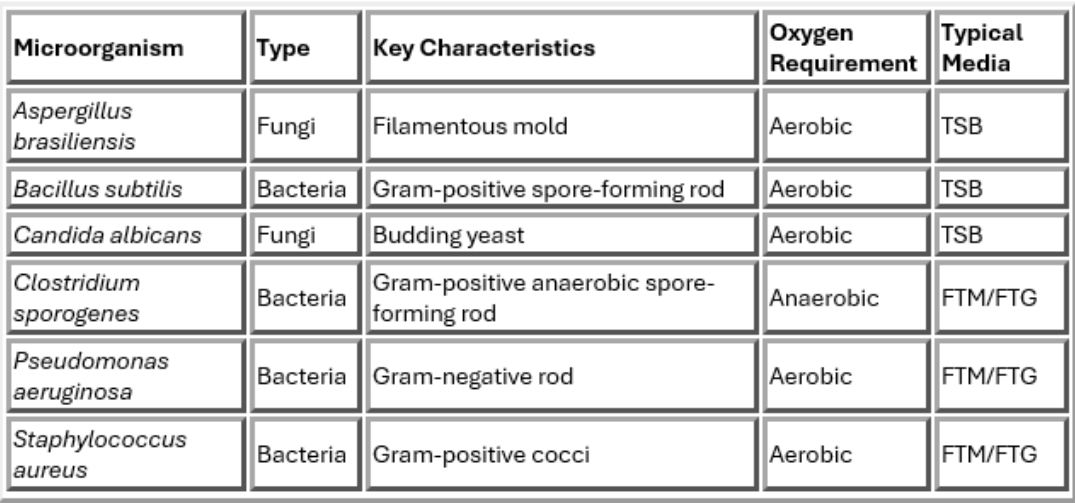
The method suitability test is performed by inoculating the selected media with less than 100 colony forming units (CFU), and confirming successful recovery and growth.
What Happens if Recovery Fails?
If all challenge microorganisms are not successfully recovered, the method must be modified and re-evaluated. Additional neutralization strategies may include:
- Increasing product dilution
- Adding validated neutralizers
- Incorporating pre-filtration dilution steps
- Performing additional membrane rinses
- Selecting alternative test methodologies
Increasingly conservative approaches may be required until all six challenge microorganisms can be adequately recovered.
Regulatory Importance
Demonstrating method suitability is a regulatory expectation and a critical component of sterility assurance programs. Regulatory agencies, including the FDA and international guidance documents such as ICH, expect manufacturers and testing laboratories to demonstrate that sterility testing methods are effective for each specific formulation.
Failure to establish method suitability may:
- Invalidate sterility test results
- Delay product release or approval
- Trigger regulatory observations or compliance concerns
- Increase patient safety risk
Importantly, the validated method remains applicable only as long as the formulation remains unchanged. Changes to active ingredients, preservative systems, vehicles, suppliers, concentrations, or sub-formulations may require method suitability to be repeated.
Key Takeaway
USP 71 method suitability is essential for:
- Ensuring sterility test accuracy
- Detecting formulation-specific inhibition
- Adapting sterility methods to challenging products
- Supporting regulatory compliance
- Protecting patient safety
By confirming that sterility testing methods can reliably recover viable microorganisms in a specific formulation, pharmaceutical manufacturers and testing laboratories can maintain confidence that sterility results are meaningful, accurate, and protective of patient health.
For more information on method suitability, contact ARL today and start the process today to obtain meaningful, accurate sterility results that prioritize patient health.
Request a Quote